
Ingredients: Andrea Grant reimagines Coast Salish myths for a new generation in ‘Modern Natives’
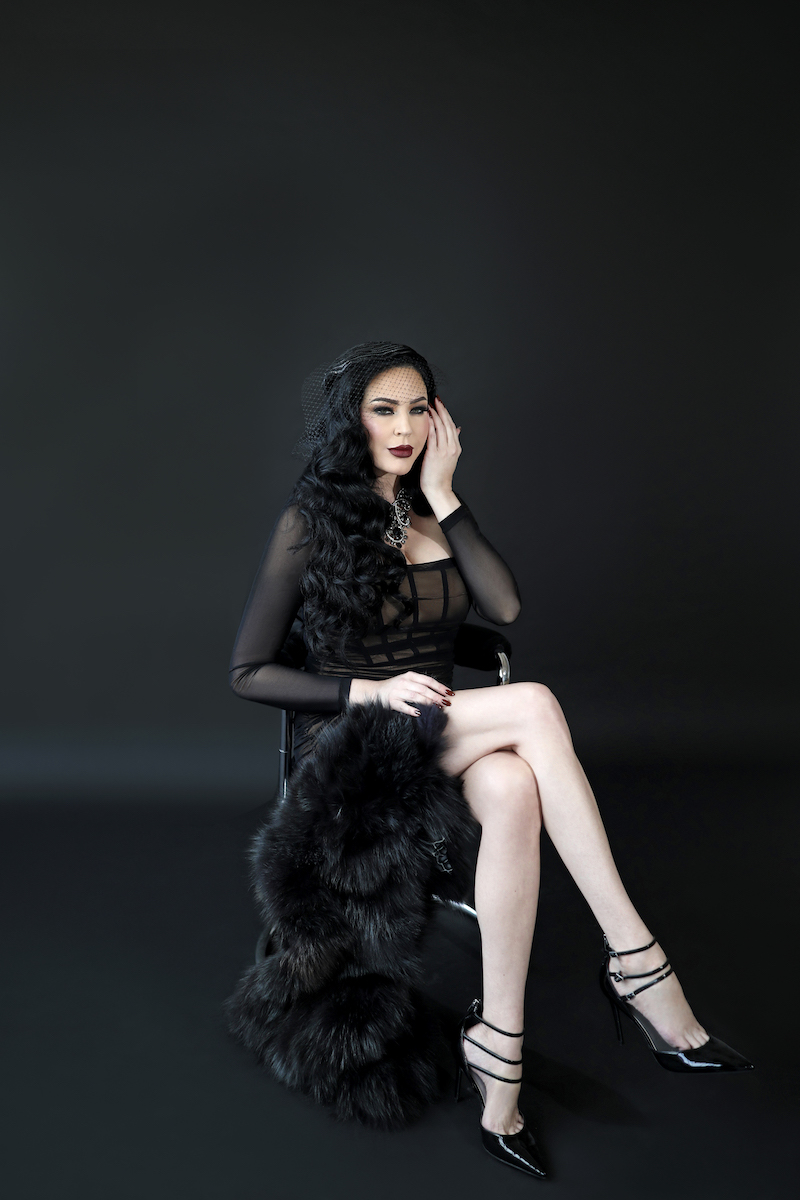
Andrea Grant (Coast Salish) is a multimedia artist. She recently released her book, Modern Natives. Mixing myth and modern storytelling, Andrea brings these stories to life.
By Aminah Syed, Fry Bread Creative Digital Storytelling Intern
Fry Bread: I would love to know more about Modern Natives, and what brought you to write this novel.
Andrea Grant: I’ve always liked mixing mythology and fairy tales and putting things together in a way that they’re not necessarily supposed to be intertwined. I thought, how about taking some of the traditional Coast Salish myths from my tribe that have been shared with me and bringing them into a modern context.
Taking these stories and reimagining them for a different generation and so that they’re more accessible because of course the old stories we’re going from oral tradition into print and something gets lost there, and then we’re digitizing everythingwas just something I really wanted to do. The artist Qwalsius Shaun Peterson is an amazing Coast Salish artist based in Tacoma, and I was a big admirer of his work. Initially we started working on the book together, and then I thought it would be really cool to add an extra layer where the characters came to life, and you could see that portrait as well.
FB: What was the hardest part about doing that and putting it in that modern perspective?
AG: I think capturing the voices so that each character would be distinct, so that they would sound like the same person narrating, and so that they would each have their own personality. I was given a lot of materials from my tribe–what that looked like were really old books that they had in one of their libraries and finders full of material that was typed on an old typewriter and photocopied endless times and just such precious knowledge and supernatural. I really wanted to weave that in. And I think it’s important, we all know how Raven Stole the Sun and stories like that. But we don’t know a lot of these lesser-known myths. It was just a question of making sure that I was being respectful of protocol and checking in with the cultural advisor and just getting her opinion on things like, Does this thing that I’m imagining, does that exist anywhere in her stories? And she would say, Oh yes, this is the make of the killer whale, et cetera. And definitely keeping close ties and working with elders made a huge difference.
FB: When you had the idea for this book, how did that idea appear in your mind, and what did that starting process look like?
AG: I always start with an outline. I had a few ideas. Listing, coming up with story titles and what the theme would be, and then writing a paragraph summary. Well, what would the story be? What is the theme of the water dream? And how far do we take it? I find it necessary to always have a roadmap before driving the proverbial car.
FB: Let’s talk more about Women’s History Month, is it a more like woman feminine focused book, would you say?
AG: Yes, the characters tend to be, with the exception of Coyote, they tend to be girls, like sort of age range, 15 or 16 to 20. They’re all on some kind of journey. And sometimes there’s a story called The Isle of Women, which touches on the missing and murdered Indigenous women’s movement. It’s about two sisters and there’s a secret in their family that they don’t realize. But meanwhile, a local girl from the tribe is kidnapped and the grandmother and the mother and the auntie take them to this secret island called the Isle of Women, which I think is a place within the Gulf Islands, where reportedly women go to sort of perform their rituals and magic. Then they find that all the women in their family can transform into spirit animals. Killer whale, bear, eagle, wolf, then they go after the kidnappers and hunt them down and save the girl that’s been kidnapped. That was a really interesting story to write.
FB: Did you have empowering women and girls in mind when writing this? Or is it just innate because you grew up like in a feminine spaces?
AG: I think both the characters are based on real people like friends and relatives. It always helps me with the story and with the visualization. Of course, I’m working on illustrations with the artists to kind of give them an idea and have pictures of real humans rather than a description of this girl is five foot six and has brown hair and light eyes. The visual references help them and then help me and my imagination . I brought some of the characteristics of these ladies’ personalities into the story, into their dialogue.
FB: What was your proudest moment while writing this book? You said it took about seven years to write it, correct?
AG: It did, just delays with art. It just takes time. Finishing it was a huge feeling of accomplishment. I also felt, I wrote a story, Coyote Dances with Destiny, and it’s in third person, and Coyote is half man, half coyote, of course. and it gets into his history and I have him as his guy who’s kind of hanging out at this dive bar and then meets this pretty girl who’s the essence of destiny and they sort of go back and forth and have this banter. Being able to write from a man’s point of view in a way of course he’s supernatural and a trickster that helps but that was that could be definitely a feeling of pride to be able to do that.
FB: What’s the next step with this book, are you going to write another book with similar, like a continuation of this book?
AG: I would like to do another graphic novel based on my series, Minx.
FB: How does it feel to be an author and an artist and being able to tie your art tightly with your culture and beliefs?
AG: I think for me, it was always where my interests lay. I was always fascinated with, with the legends and stories and fascinated by my culture. And I kind of went on a quest at one point to reconnect with my tribe and meet them. They live on Penelakut Island, which is off of Vancouver Island, between Vancouver Island and Vancouver. There’s all these little islands and just getting to know them, how they spoke, how they would weave myths into everything. I really wanted to carry that through. I feel it’s my calling to be a storyteller and to stay in the native genre because there’s not a lot of people doing it. These myths need to be preserved and shared and enjoyed in a way that they can’t if they just stay in a dusty closet written down on a piece of paper.
FB: What do you want people to take away from your book and your art, in general?
AG: I would say a new perspective. I often use the term modern native. What is this generation’s point of view as opposed to the authors that we know? What do we have to offer? Whether it’s visual art, whether it’s new media, I’m very interested in animation. and how to take art and bring it to life that way. How do you capture people’s attention? I would really just like them to feel a sense of empowerment through these myths and stories because they are, they all have lessons attached to them. Unfortunately, I lost a couple of elders along the journey. The things that they told me are even more precious and this is cultural knowledge that people can younger people can have access to and take that wisdom and enjoy the journey.
FB: Is there anything you want to say anything about your novel or any of the art you’ve made?
AG: Most of my work is on my website, which is andreagrant.com. And I have an array of poetry, spoken word films, excerpts of the Mink’s graphic novels, some stories I’ve written, and that’s a good resource to start. And of course, Modern Native, the book is on Amazon. Right. And then as far as a takeaway, Yeah, I just really want to get the word out that this exists. I think it’s an evergreen book. These stories are classic and yes, they’re reinvented in a different way from traditional myths, but I think that’s the exciting part is that we get to make new versions of myths as artists and creators.