
Ingredients: Tierra Alysia on working the runway with Native students
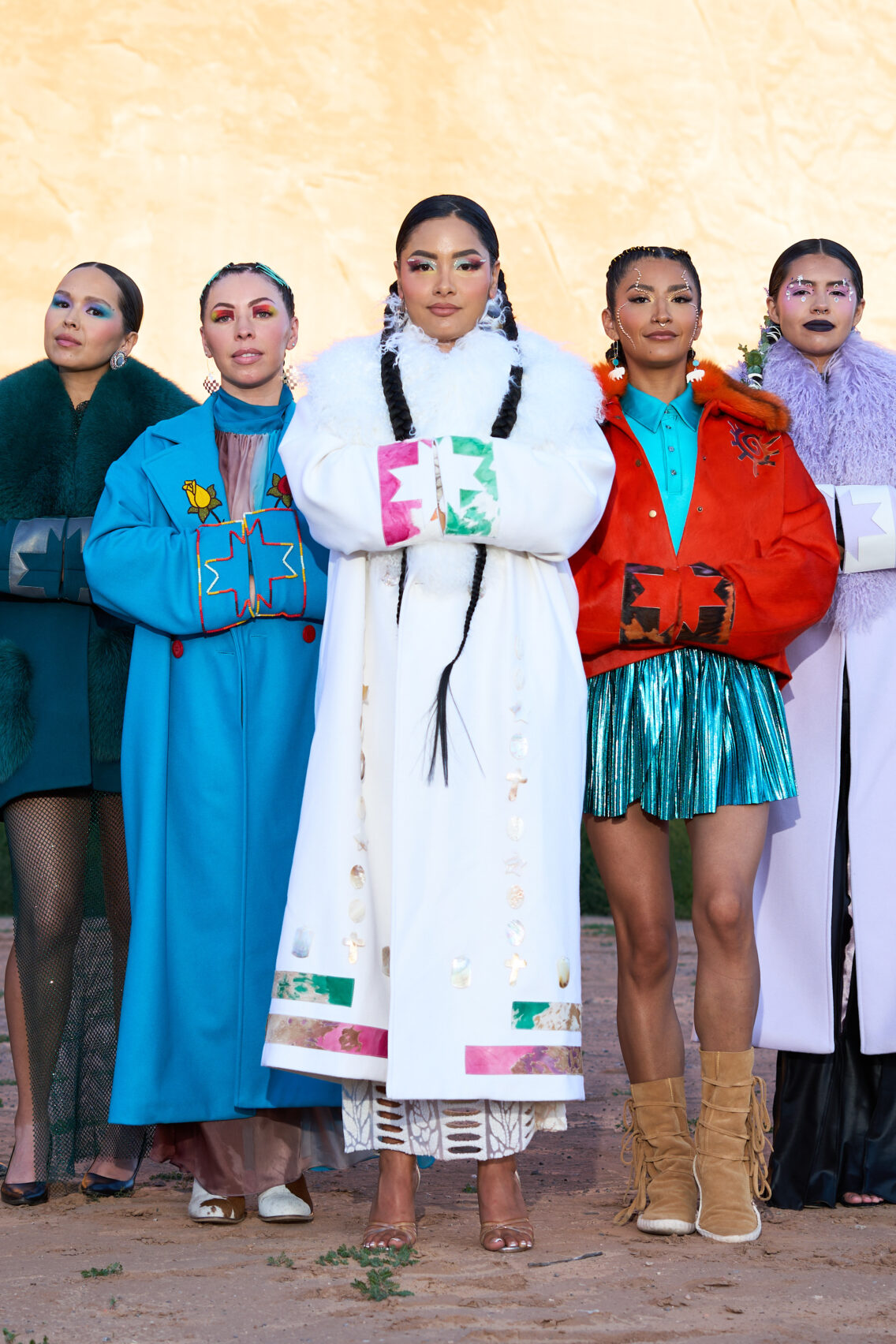
Tierra Alysia (Kashia Pomo, Miwok, Cree and Filipino) is a Seattle based Native fashion designer telling stories through design. She uses her fashion brand, VIVIDUS Runway, to promote heritage and activism. She is planning on working with Haskell University students, in Lawrence, Kansas to create a New York Fashion Week runway show.
By Aminah Syed, Fry Bread Creative Digital Storytelling Intern
Tierra spoke with us about her passion for storytelling and design before she comes to Kansas to work with Haskell students.
FB: What made you get into the fashion industry?
Well, I’ve wanted to be a fashion designer since I was a little kid. Becoming one of the more predominant Indigenous designers happened moreso in the last two years, but it wasn’t something new to me in any way. I’ve always wanted to do that.
In high school, I knew that I wasn’t even going to be going to university then. Kids were going, and they were doing math, trigonometry, science, language for four years. I was like, “yeah, no.” I’m going to do all the fun art classes, like acting, photography, electives. And everyone was like, “what, are you serious?” I was like, “I’m going to be a fashion designer. I’m going to art school, I don’t need to do all this stuff to get into university.”
FB: How did you apply those art skills from school into your work?
I went to a private school, New York Fashion Academy, where I got my associate’s degree for fashion design and business. And then I went to Central Saint Martin’s in London; I studied many different things, but went about it in a really different way. I would go there for months at a time and kind of just get my education in bits and pieces. That’s how I applied my fashion business, fashion design and everything from there.
Originally, I failed out of college at Seattle Central’s fashion program twice. My teacher told me I’d never be a fashion designer. She literally was like, “this isn’t cut out for you.”
FB: What made her say that?
I had a really hard time with patterns. I had a really hard time with drawing, too. So, a lot of the times they want to see your sketches, they want to see what you’re going to make, but I’m the complete backwards way of designing. I design from the fabric, from the story. I don’t have something where I’m like, “okay, this is what I’m going to make it, I’m going to draw this.”
I find a story, find a person, find inspiration, then find the fabric, [and] figure out the details. Just one [example], one of my collections was based all upon the abalone – the colorway, it was all around the shell. So from there, I’m building the collection that way, because I can’t draw.
I actually couldn’t show you any sketches from any of my designs. They’re all just in my head, so teachers were just yeah, absolutely not. But that’s the thing: You could be good at certain things, but I got to a point where I’m fortunate if I could pay people to do patterns and then that someone focuses on that, then I focus on what I’m good at, which is making the clothes and designing them.
FB: I want to know more about that and how you create stories with fashion.
I’m a good storyteller but also, I’ve always been into activism, and I’m always trying to figure out how I can have a win-win situation of how I could help someone through what I love doing. Everybody has gifts in this life, everybody’s good at something. How can you use your gift of what you’re good at to make a positive change?
I was already going to marches, I was already going to community meetings. This is back when I was fresh out of college year over 10 years ago. But now that I’m set up and building a name for myself in fashion, everything is political. Your fashion’s political, where you spend your money, the companies that you associate yourself with, all of that is political, whether people like to believe so or not. It matters where we spend our money and what we do with it.
FB: How do you merge your identity into your art and your storytelling?
Originally, I started out in golf. So my golf stuff wasn’t necessarily– I’m thinking, like, OK, I’m designing a Native flair to this. Like I said, it was really hard for me to break into golf because it’s a very white sport. So no one was buying it. I mean, there’s people buying it – I sold $5,000 my first day opening my website. But after that, it was like, “okay, how do I get this in a golf club? How do I continually make money from this?”
I was like, “you know what, screw this.” Why don’t I just design what I really wanna design? That’s honestly what worked. To show my real personality through clothing and through my designs, that’s what got me the hype and people started paying attention.
There were people that realized I was Native, and then they asked me to come out and do Santa Fe. Santa Fe has a big Native Fashion Week and I’d never been there before. People were like, she’s a Native designer. I’m thinking, What? I’ve never been called that before. I just thought I’m a designer, I never, I never realized how much of importance that was. Ever since then, that’s shaped my whole design style. I’m gonna design what I like and tell stories of all different Indigenous people – not just my own, through what I love doing.
FB: Why did you choose Haskell?
When I went to Santa Monica College for my first public speaking engagement, it was nuts. I couldn’t stay long enough. They had so many different questions for me about business, about fashion, about the industry that I was like, no, there’s something here. There’s something meaningful when someone that looks like you or identifies with you and understands what you’ve gone through.
I know when I was starting, I was so in the dark. Like none of my family was in business, nobody had money, nobody had connections. So, I was out here making $10,000 mistakes every other month, stuff that would normally put people under.
There’s a lot of great talent that doesn’t have the capital, doesn’t know how to run a business, or doesn’t know what to do to protect themselves legally. There’s just so many things, So for me, I was like, I would love this. I prayed over it. It just came like in a dream to be like, “okay, this is what I’m on this earth to do, is to help people.” The whole thing I’ve always had in my head was to help people with my passion of what I love doing. I was just like, damn, how perfect would that be?
FB: Next week you’re coming to Haskell, what your expectations?
I’m so excited to just meet them face to face, I’m such a visual person and a people person and just an empath. To feel the excitement and the energy in the room when I meet everyone, that helps me like even create and keep going. So, I’m so excited for that, but also just to really hear stories about everybody, like to learn about them.
Because honestly, it’s such a unique experience. In my day and age, when we were in school, it was like a thing to just not even say you’re Native. And even goes back all the way to my parents, of they are white on their birth certificate, just because they had to hide that they’re Native for safety. My grandma was in took in boarding school. So to be in a situation, like even today, it makes me almost want to cry when I’m talking about it, was so powerful and beautiful for people to be, “I’m this”. Some of them were saying their Native name, and then they said where they’re from and their tribe, and I was like, this is an alternate universe.
FB: What do you want people to know?
II really hope that other Native fashion is so popular and there’s been so many shows and so many organizations pushing Native fashion. I really hope that conventions, they look at this as an example and instead of, and really practice what they preach and instead of being extractive, like look what we’re able to do.
Like this is real tangible outcomes and work, like there’s work and there’s a result. Instead of like promising exposure, all this, no, put your money where your mouth is and invest so that they can walk away with real life work experience, real connections, real things that turn into money, that turn into opportunity, that can make them money and that can set people up for the rest of their life.
I hope that other people that say that they want to help native fashion really look at this as an example of true, you know, community and really honest, true help. Instead of parading us around on stages and selling $200 tickets, $500 tickets, and using us as a spectacle that doesn’t actually help us with our careers at the end of the day. It harms us, really.