
2026 Luce dissertation fellows in American art
The American Council of Learned Societies has announced the recipients of the 2026 Luce/ACLS Dissertation Fellowships in American Art, recognizing a new cohort of emerging scholars whose research is expanding the scope of art history in the United States.
Funded by the Henry Luce Foundation, the annual fellowships support doctoral candidates pursuing innovative projects that advance the study of American visual culture, including Native American art. Each fellow will receive $43,500 to fund a year of research, writing, and travel between July 2026 and May 2027.
Established in 1992, the program has supported more than 300 scholars, many of whom have gone on to become leading academics, curators, and cultural figures across the country.
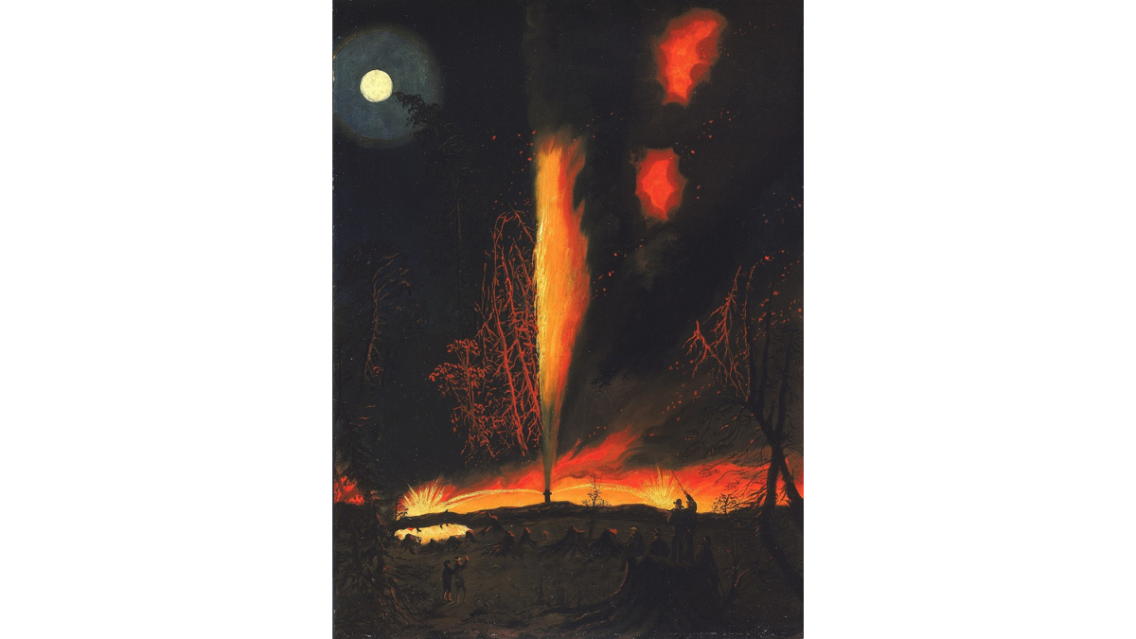
This year’s fellowship projects highlight historically underrepresented perspectives and subjects. Research topics include Asian diasporic photography and film in the Mississippi Delta, Jewish identity in early American portraiture, and environmental critiques of landscape art in relation to the petrochemical industry.
“ACLS is proud to support this exceptional group of scholars whose research on visual art broadens the field in new and exciting ways,” said Alison Chang, senior program officer at ACLS. “Their work reflects the fellowship’s ongoing commitment to advancing rigorous, field-shaping scholarship in American art history.”
Among the 2026 fellows are Kiki M. Barnes of the City University of New York, The Graduate Center; Emily Rose Beeber of the University of Delaware; Morgan J. Brittain of the College of William & Mary; Ashley Cope of the University of Maryland, College Park; Kale Serrato Doyen of the University of Pittsburgh; Delaney Chieyen Holton of Stanford University; and Gabrielle Tillenburg of the University of Maryland, College Park.
Their projects examine a wide range of themes, from cultural imaginaries of the Great Lakes and Black community archives in Pittsburgh to transpacific visual culture in the U.S. South and the impact of U.S. occupation on island territories.
Barnes’ dissertation in particular employs Henry Wadsworth Longfellow’s 1855 epic poem “The Song of Hiawatha” as a framework to examine the settler-colonial imagination of the North American Great Lakes during the nineteenth and twentieth centuries. More than a Euro-American literary phenomenon, the poem shaped regional place names, supported extractive capitalism, and transformed Indigenous lifeways. Through four case studies spanning fine arts, visual culture, and performance in the century following the poem’s publication, this project demonstrates how “Hiawatha” established a precedent of mythological thinking at the expense of the Great Lakes and its Indigenous cultures, particularly the Anishinaabeg and Sioux, whose communities continue to inhabit the region and contend with the poem’s legacy.
ACLS, a nonprofit federation of 81 scholarly organizations founded a century ago, continues to promote the idea of knowledge as a public good while supporting scholarship across the humanities and social sciences.