
Emily Kam Kngwarray’s first New York exhibition, ‘The Turning Season’
Pace Gallery will present The Turning Season, its first New York exhibition dedicated to the celebrated Australian artist Emily Kam Kngwarray, from May 15 through August 14. The show will span the gallery’s 508 and 510 West 25th Street locations, offering a sweeping survey of the artist’s career through her most renowned paintings and textile works.
Organized in collaboration with D Lan Galleries, the exhibition follows a major 2025 retrospective at Tate Modern in London, further cementing Kngwarray’s international recognition.
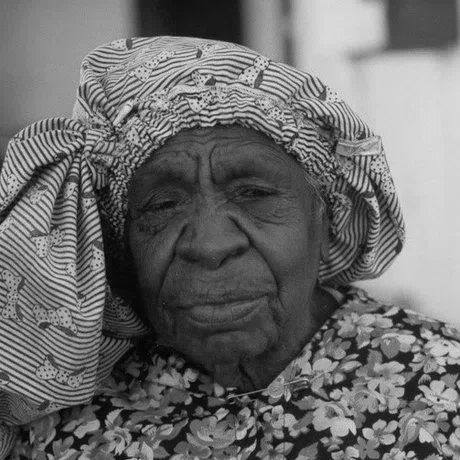
Born around 1914 in Alhalker in Australia’s Northern Territory, Kngwarray was an Elder of the Anmatyerr people and a custodian of her ancestral land. Her work reflects a profound connection to Country—a concept in Aboriginal and Torres Strait Islander cultures that encompasses land, waters, skies, living beings, and the cultural and spiritual ties that bind them. Rooted in the philosophy of the Dreaming, her practice channels ancestral knowledge and ecological relationships into vivid, abstract forms.
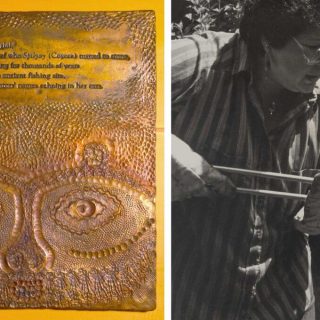
Kngwarray began her artistic career working in batik in the late 1970s as part of the Utopia Women’s Batik Group, where she developed a distinct visual language. She transitioned to painting on canvas in her 70s, quickly gaining acclaim for her dynamic compositions inspired by the anwerlarr yam, or pencil yam, a plant central to her identity and environment. Its underground root systems and seasonal cycles became recurring motifs, expressed through intricate dotting techniques and later through sweeping linear gestures.
Over less than a decade, Kngwarray produced approximately 3,000 paintings, maintaining an intense creative output until her death in 1996. Her works capture the rhythms of seasonal change, with color palettes shifting between subdued dry-season tones and vibrant hues following rainfall.
The exhibition will include works created between 1981 and 1995, including early batiks and significant paintings from the 1990s, a period marked by technical innovation and expanded scale. Highlights include Alalgura I (1990), Untitled (Dry Winter Yam Story) (1992), and Desert at Dawn (1994), alongside Body Markings (Sorry Cuts) (1994), previously shown in the Tate Modern retrospective.
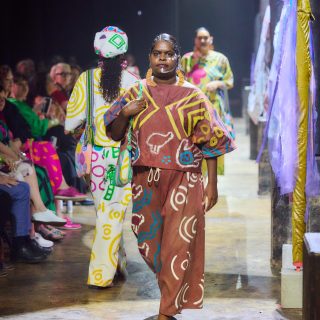
Also featured are textile works by fellow Utopia artists Judy Kngwarray Greenie, Audrey Kngwarray Morton, and Ruby Kngwarray Morton, who collaborated with Kngwarray during the early batik movement.
Today, Kngwarray’s work is held in major institutions worldwide, including the National Gallery of Australia, the Museum of Modern Art, and the National Gallery of Art, underscoring her enduring global influence.
The Turning Season highlights Kngwarray’s evolving techniques and enduring vision, presenting a body of work that continues to resonate across cultures and generations.
Learn more and see the work at Pace.