
Ingredients: Colleen Lucero on curating Kachina doll exhibit from the Hopi perspective
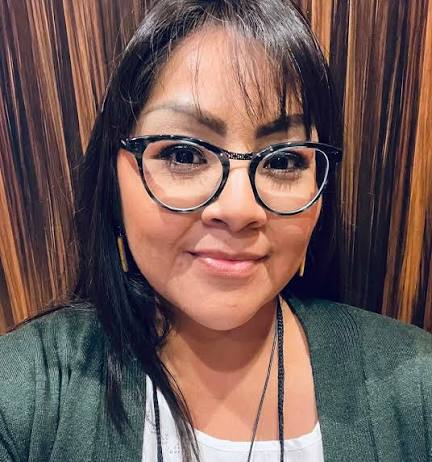
For over five years, Hopi museum consultant and managing director of the Hopivewat Learning Center, Colleen Lucero, used her knowledge and community ties to help curate Brooklyn Museum’s Hopi Kachina Doll exhibit. Fry Bread talked with Lucero about her experience, Hopi heritage, and hopes for the exhibit—an exhibit uniquely presented from the Hopi perspective.
By Hannah Loub, Fry Bread Digital Editor
This interview has been edited for length and clarity.
Tell us about yourself and your work as the managing director of the Hopivewat Learning Center.
Colleen Lucero: I stepped into my role within the Hopivewat Learning Center about five years ago when we took the project out from the Hopi tribal government and pushed it forward as a nonprofit…It was a project revived from a historical plan to create a Hopi cultural education center for the Hopi people.
Historically, a lot of materials have been collected from the Hopi tribe and are currently being managed by other outside non-Hopi professionals. So, we wanted to create this learning center to house materials and be a resource for our 12 villages and 30 different clanships.
I always like to mention this about the organization, is that we’re shying away from the term museum because it’s based upon a lot of Western values that are not of our own. “Museum” is more about ownership than stewardship, and so when we’re a living culture, we wanted to make sure that this would be a place that celebrates that.
How did you come to be involved with Brooklyn Museum’s Hopi Kachina exhibit?
Colleen Lucero: Before I worked with the Hopivewat Learning Center when it became independent, I worked with the Hopi Cultural Preservation Office. So, I was able to travel to Brooklyn with Lee Wayne Lomayestewa, who also works with the Hopi Cultural Preservation Office, to view the collection…So, that’s how I first learned about the collection and started working with Brooklyn. And then as I transitioned out through the nonprofit, I was able to continue that relationship as a museum consultant.
What did your role specifically look like with the exhibit?
Colleen Lucero: I was a guest curator and I helped with a lot of the content and being able to connect with Hopi women. We did a lot of interviews and we were able to vet some of the information with the elders to make sure it was appropriate…As I mentioned, we have 12 different villages and 30 different clanships, so there’s more than one way to tell things, and I speak on behalf of what I’ve learned, and that was an important part.
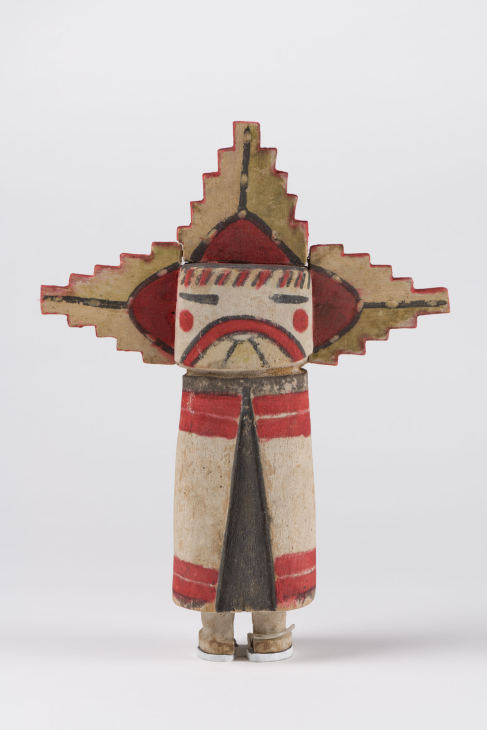
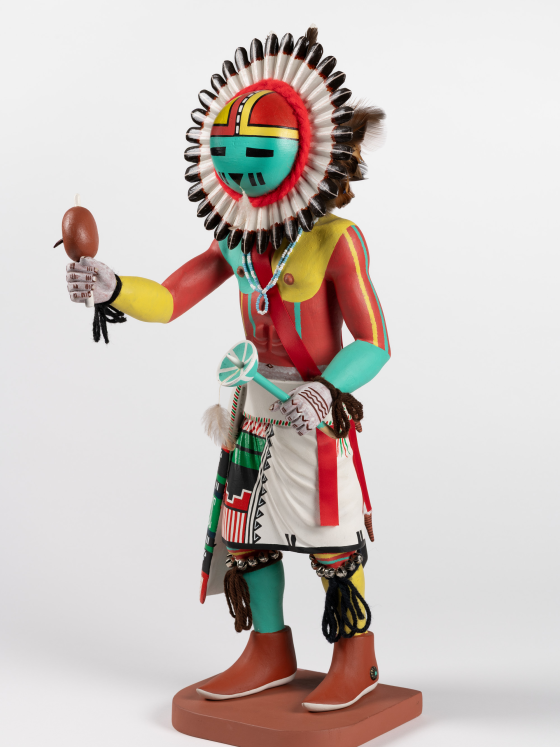
I think Brooklyn, they were used to working with one department, but I was able to help them find a different side of the community and connect with women and children and get their perspective because that hasn’t been done with a Hopi Kachina exhibit. It’s mainly been scholars, researchers, museum or collectors, and it’s usually male perspective, and we wanted to bring to light the other side of Kachina dolls, and most importantly, the purpose of them.
How long was that process of having these conversations with the women and children and connecting with the communities?
Colleen Lucero: I believe it was over a span of, like, five years…When I went to go visit the collections, I was just so happy to see these dolls. They were so old and some of them were worn and I couldn’t help but think, “Oh my God, they were actually played with at some point, and these were somebody’s dolls,” and it was like visiting our ancestor, basically, and seeing and embracing them and saying, “Oh, my God, I’m so happy to see you,” and “Oh, I really wanted this one” or “I remember when I got mine like this.”
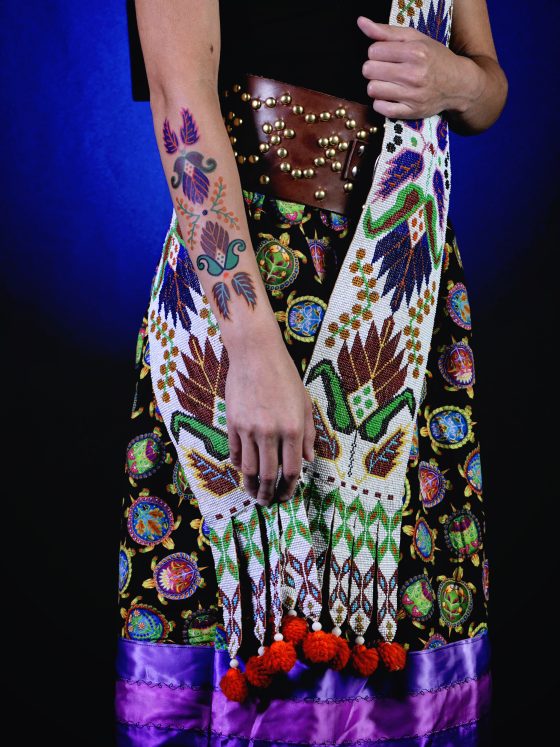
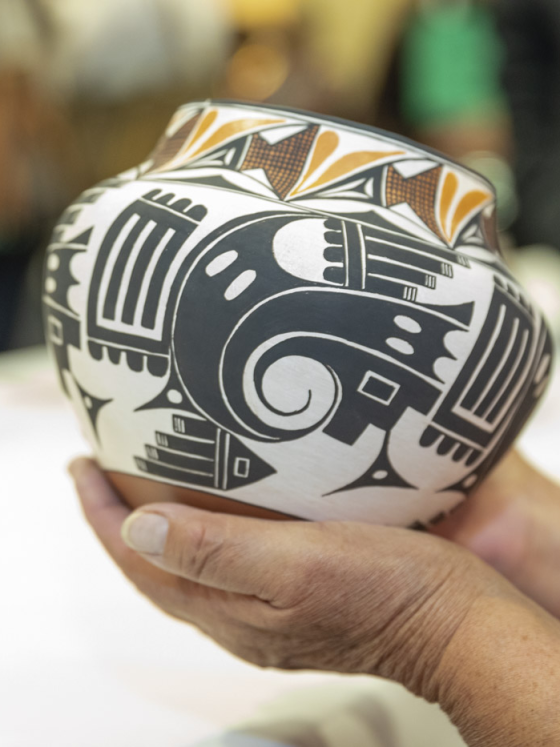
So, I just started sharing the memories that were coming to me about my experience and that’s when we finally sat down at the table and we said we should do an exhibit on the female perspective, on the recipient’s perspective, because that really hasn’t been done before. And so from then on, that’s when we started exploring this idea and then most importantly, going through the proper protocols… Then, also doing a lot of research with female artists to kind of highlight their works in the Kachina imagery that they embed in various types of mediums
Can you tell us more about how you personally connected with your Hopi identity in the curation of the exhibit, and what you learned about yourself, your ancestors, and your community?
Colleen Lucero: I would like to start off first that I come from the Kachina clan. So culturally, I’ve been always taught that it was my responsibility to help take care of them. That’s our overall goal, because that’s who we represent.
In life, I’m a mother, I’m a godmother, I’m a grandmother, and I’m an auntie. So, just learning about how Kachina dolls help guide us to be the best versions of ourselves and how we should strive in our own communities to welcome everybody, to provide a good home, to feed everybody, to be the seed keepers and the fire keepers of our family. You know, these are the principal values of Hopi women, and this has been a huge learning experience from what I already knew and kind of enriched that experience.
When I took my mother with me recently to the exhibition, she was just in awe. She said she saw her grandmother in those things…It was just a beautiful experience to see other people enjoy it as well, non-Hopi people coming in with their children and being able to learn about this and creating a safe space, I think.
This was real personal to me in another way in that when I was a teenager, I went to New York and that’s when this new museum opened and I was so excited to go there to see about my own tribe. I went there, and there was just this little thing of Hopi, and a little doll, and I was so disappointed, you know? I was like, “Man, we’re so much more than this.” I think from that day on that really sparked my interest in working in these spaces.
For the non-Hopi visitors to the exhibit, what do you hope their takeaway is, or what do you wish that they knew about the Hobi people that can maybe come through with this exhibit?
Colleen Lucero: In the planning phases, it was really important to us for visitors to understand that we are a living culture.
Overall, our goal was just to talk about how we adored the dolls and what their uses were in the community and how we appreciated them, not from a collector’s perspective, but from a community perspective in appreciating the dolls, learning about what their purposes are and how they guide children and girls all the way up from infancy to marriage. And then, also celebrating women artists who utilize the Kachina imagery in their works of art.
You mentioned previously that you’re hoping for the exhibit to travel to other communities. What do those next steps look like, and what do you ultimately plan for the items within the exhibit?
Colleen Lucero: Funding is a huge issue and securing a venue that would allow it, because it’s a pretty big exhibit. It’s like 122 items, I believe…The Hopi tribe, they don’t have all the staff, conservators, and tracking specialists, and just all these components that you need to have a traveling exhibition. So, I think working on both ends in securing working professionals and the resources to have is the first step.
Also, staying in contact with the tribe and being able to make sure that this is in alignment with what’s safe and appropriate still, and just being open to tailoring the exhibit a little bit more for the Hopi community.
In previous times, museums always just picked and chose what they wanted to learn about us and then spoke on it on our behalf, so to speak, but it was never our own voices. And so I’m glad that things are changing now. I’m glad that we’re able to tell our own histories in these spaces and that they’re willing to work with us. Moving forward, I would still like for that to be the case.
For you in your professional life, are there any current projects or do you have any personal goals as you move forward?
Colleen Lucero: I want to continue the work that I’m doing with other institutions and organizations to help them connect with Hopi people. I also really want to help our own people in gathering and creating this space to be a resource for our younger generations to be able to take part in this process, be able to be a part of the building process… because overall, this is for them.
We have a lot of modern histories, we have a lot of veterans’ histories, we have a good running history that’s still strong today, so I feel like there’s just so much out there for us to be able to work with. I really still would like to invest in that.