
Aboriginal artists debut landmark dual exhibitions in New York
A major presentation of contemporary Australian Indigenous art has opened in New York, bringing the work of two senior Aboriginal artists to international audiences for the first time.
Organized by Spinifex Arts Project Aboriginal Corporation in partnership with ReDot Fine Art Gallery and the National Arts Club, the exhibitions showcase solo presentations by Timo Hogan and Kunmanara Patju Presley.
Titled “Kaṉparkanya – The Wanampi” and “Paltjuliri,” the exhibitions are on view at the National Arts Club from March 4 through April 23, 2026.
The dual presentation offers a rare opportunity to experience the spiritual and visual power of art from Tjuntjuntjara, a remote community in Western Australia’s Great Victoria Desert. Together, the exhibitions feature more than 40 large-scale paintings developed over four years.
According to Spinifex Arts Project leaders Olivia Sproull and Riley Adams Brown, the works reflect the deep cultural narratives of Spinifex Country, known as Tjukurpa, or Dreaming stories. These narratives recount sacred sites, ancestral journeys, and enduring ties to the land that have sustained the Pila Nguru people for generations.
“This exhibition brings important cultural knowledge to global audiences while strengthening understanding and respect for Indigenous resilience,” they said.
The presentation also serves as a tribute to Presley, a respected senior lawman who recently passed away, honoring his cultural legacy through a dynamic body of work. His paintings are characterized by rhythmic dotting techniques that depict ancestral beings and creation stories, rendered with vibrant movement and intensity.
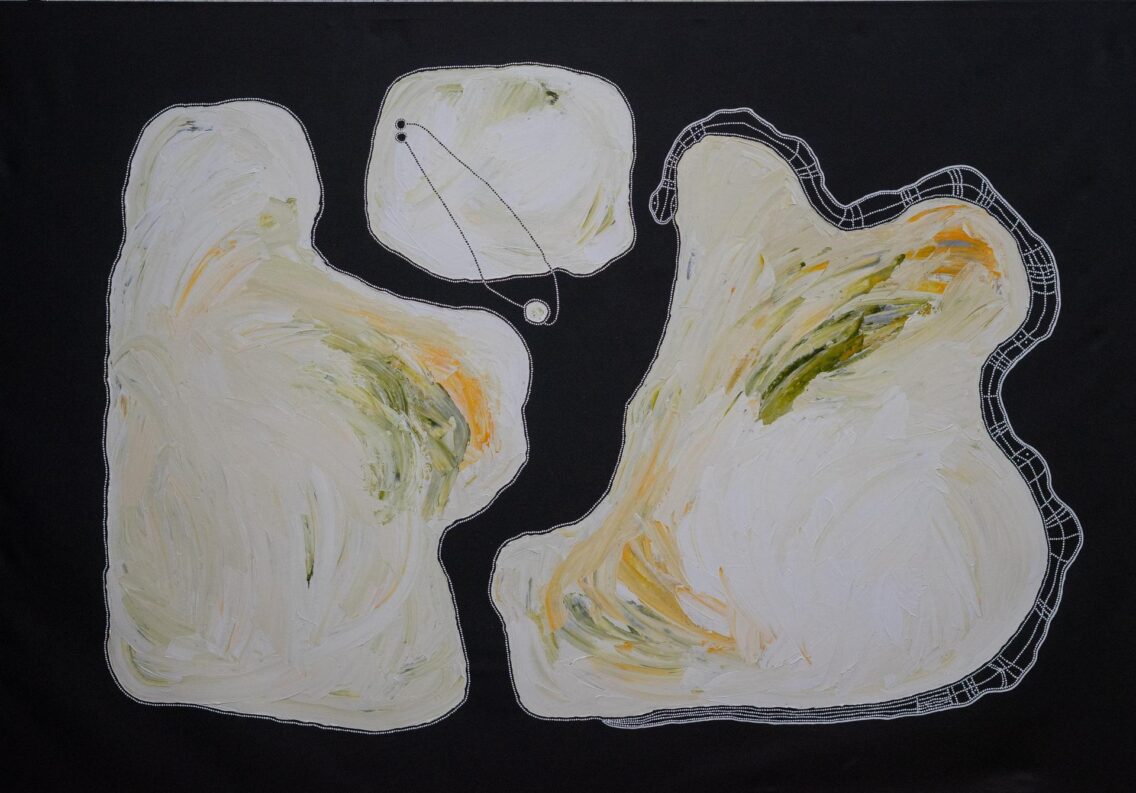
In contrast, Hogan—winner of the 2021 Telstra National Aboriginal and Torres Strait Islander Art Award—has gained international recognition for his meditative portrayals of Lake Baker (Pukunkura), a sacred site for which he holds custodianship. His largely monochromatic compositions use subtle layering and tonal variation to evoke spiritual depth and expansive landscapes.
Officials at the National Arts Club said the exhibition aligns with the organization’s longstanding mission to highlight underrepresented artistic voices and traditions. Founded in 1898, the club hosts more than 150 public programs annually, drawing tens of thousands of visitors.
The exhibition also underscores the history of the Spinifex people, who were displaced from their homelands during British nuclear testing in the 1950s before successfully reclaiming their land rights decades later. Today, the Spinifex Arts Project supports artists in preserving and sharing cultural knowledge through contemporary visual art.
Together, the two exhibitions mark the most extensive international showcase to date for both artists and represent their first solo presentations outside Australia.