
Diné weaver Marilou Schultz gets her first career survey at the Hessel Museum of Art this summer
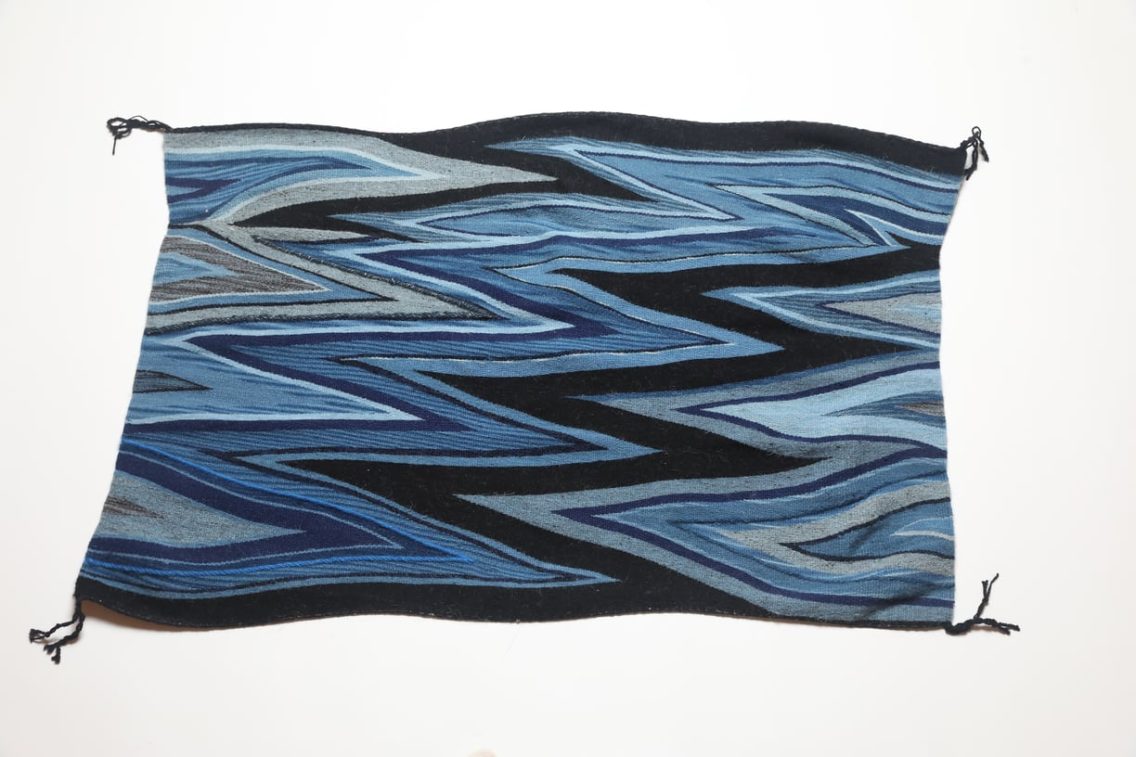
The Hessel Museum of Art at Bard College will open the first major survey of Navajo/Diné weaver and mathematics educator Marilou Schultz on June 27, bringing together six decades of work that bridges Indigenous textile tradition and the history of computing.
The exhibition, Replica of a Chip: The Weaving Technology of Marilou Schultz, runs June 27 through November 29, 2026, and traces how Schultz moved from a childhood introduction to the loom — observing her mother and grandmother at age seven — to creating woven replicas of computer microprocessors and digital data visualizations over a 65-year career.
The show’s centerpiece is a group of chip-inspired weavings, anchored by the work that gives the exhibition its name. In 1994, Intel commissioned Schultz to weave a replica of its Pentium microprocessor, a project that launched an ongoing body of work connecting textile craft to semiconductor design. More recent pieces include Popular Chip (2025) and Integrated Circuit Chip & AI Diné Weaving (2024), both of which extend her exploration of the visual and technical parallels between weaving structure and chip architecture.
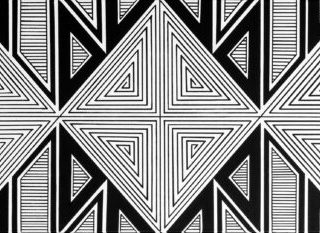
The exhibition also situates Schultz within a broader family tradition, featuring works by her mother Martha Schultz, her grandmother, and her niece Melissa Cody. Weavings in styles including doubletwill, Two Grey Hills, and the Germantown style — which emerged from the Navajo Long Walk — illustrate the intergenerational mentorship that has shaped her practice. Technical highlights include Schultz’s use of the wedge weave, which allows for asymmetric and three-dimensional designs, and her incorporation of metallic thread to evoke the aluminum and copper found in actual microchips.
Archival materials related to a Fairchild Semiconductors manufacturing plant that operated on the outskirts of the Navajo Nation in the 1960s and 1970s are also part of the presentation. The plant, located near Shiprock, employed primarily Navajo women before closing in 1975 following reports of poor working conditions and a standoff between workers and local law enforcement. Schultz’s chip weavings draw a direct line between that largely unacknowledged labor history and her own artistic practice.
The exhibition is curated by Candice Hopkins, Executive Director and Chief Curator of Forge Project and a Fellow in Indigenous Art History and Curatorial Studies at CCS Bard, who first collaborated with Schultz at documenta 14 in Kassel in 2017.
An illustrated catalogue co-published by CCS Bard and Forge Project will accompany the show, including essays and an oral history with Schultz.
An opening reception is scheduled for Saturday, June 27, from 2 to 5 p.m. Limited free seating is available on a chartered bus from New York City; reservations can be made by calling +1 845-758-7598 or emailing mrozell@bard.edu.